For half the year in a Zone 4 climate, our gardens are asleep. The traditional landscaping approach tells us to spend our autumns frantically “putting the garden to bed”—cutting every perennial down to the ground, raking away every leaf, and leaving behind a flat, barren expanse of mulch until May.
But in a northern permaculture system, a garden doesn’t stop working just because it’s frozen.
By strategically choosing cold-hardy plants with strong structural elements, you can create a landscape that is just as breathtaking in January as it is in July. Instead of fighting the frost, we can design for it. Here are the powerhouse plants that transform a dormant, snow-covered yard into a beautiful, functional winter ecosystem.
1. The Wispy Architecture: Native Prairie Grasses
When everything else has lost its leaves, native grasses provide essential movement and texture to a frozen landscape.
Prairie Dropseed
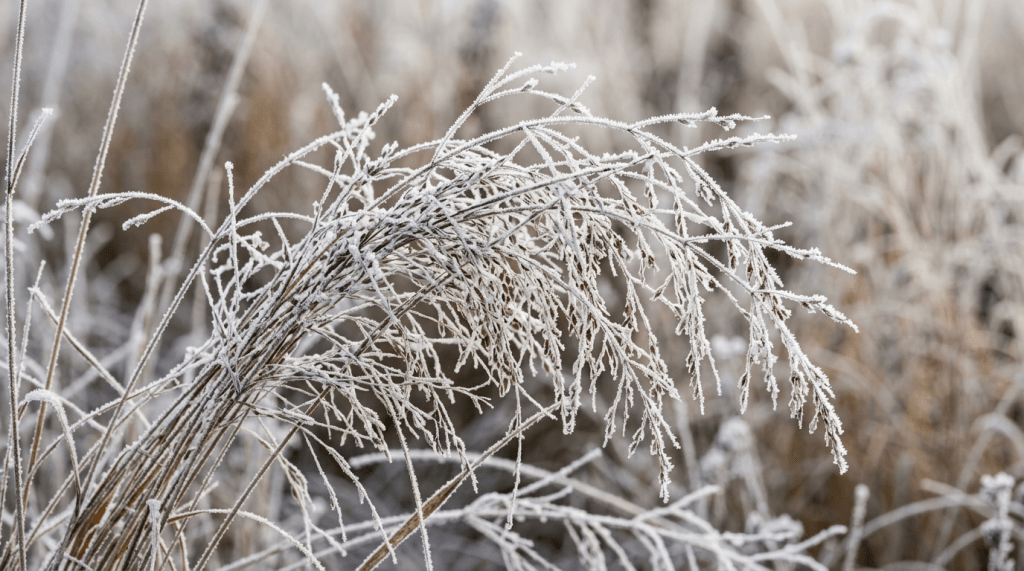
This is an absolute staple for winter interest. Because it grows in a graceful, fountain-like mound, it catches early morning frost beautifully. Even under a heavy snowfall, the thin blades maintain their elegant, sweeping shape, adding a soft, wild texture to the edges of your garden beds.
Little Bluestem

The rigid, upright stems take on a gorgeous copper-rust color in the deep cold, creating a striking contrast against a blanket of white snow.
2. Flat Tops and Seed Heads: The Snow Catchers
To make a winter garden visually interesting, you need varying heights and shapes. Plants with rigid stems and prominent seed heads act like tiny shelves, catching and holding pockets of snow.
Yarrow
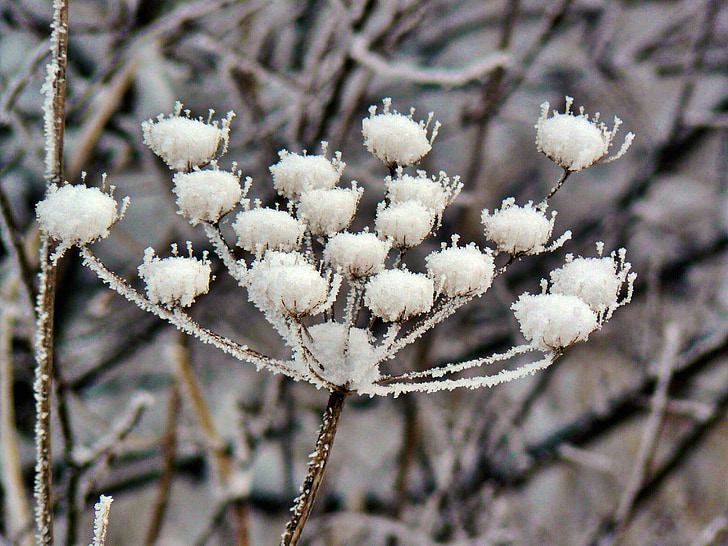
The flat, umbel flower heads of yarrow are nature’s perfect snow-catchers. When left standing, these strong stems hold their structure straight through the harshest winter winds, creating beautiful, frosted architectural tiers in your garden borders.
Purple Coneflower & Asters

The dark, spiky cones of coneflowers and the dense, structural stems of late-season asters stand tall above the snowline. Beyond looking incredibly rugged and beautiful, these seed heads serve a vital permaculture function: they act as a natural bird feeder, drawing goldfinches and chickadees to your yard all winter long.
3. The Woody Contrast: Shrubs and Hedges
A resilient northern garden relies on layers. Incorporating tough, cold-hardy shrubs gives your yard a permanent backbone that grounds the more delicate perennials.
Red Osier Dogwood
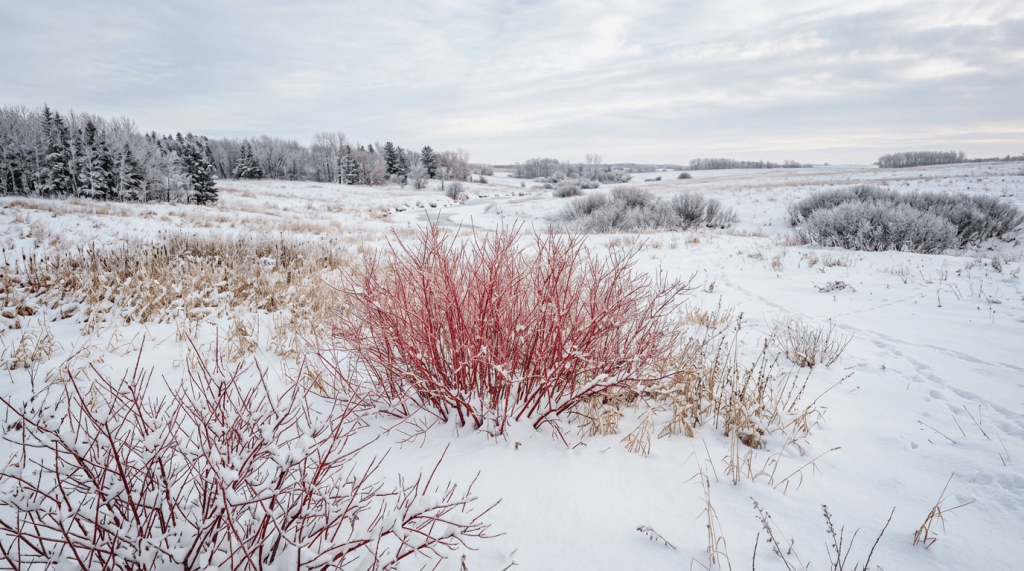
If you want a brilliant pop of color, the bright crimson stems of this native dogwood against a snowy, dormant backdrop are unbeatable.
Ninebark
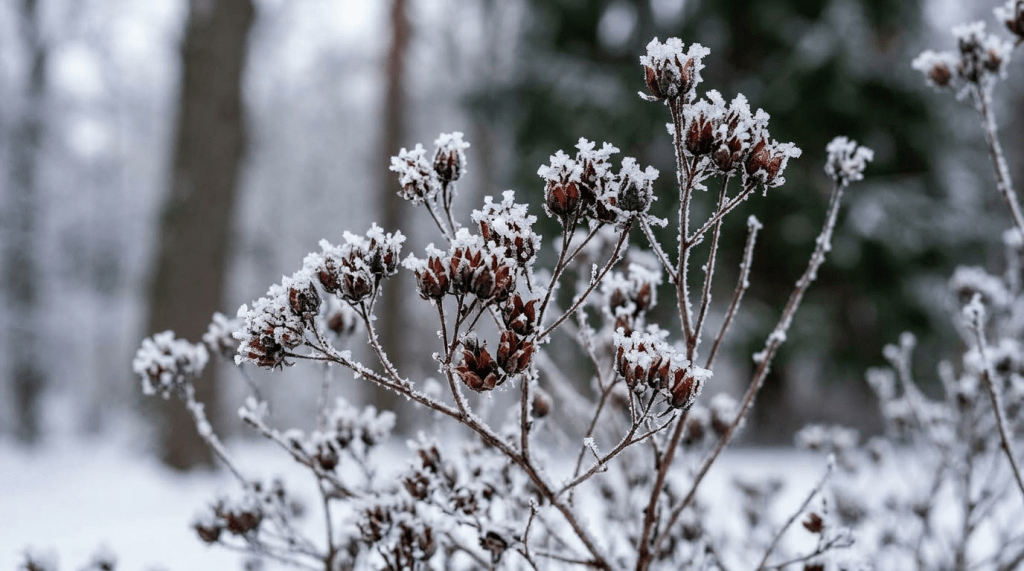
As this tough shrub matures, its peeling, exfoliating bark adds incredible tactile texture to a winter landscape, while its dried seed clusters look beautiful when tipped with frost.
Witch Hazel
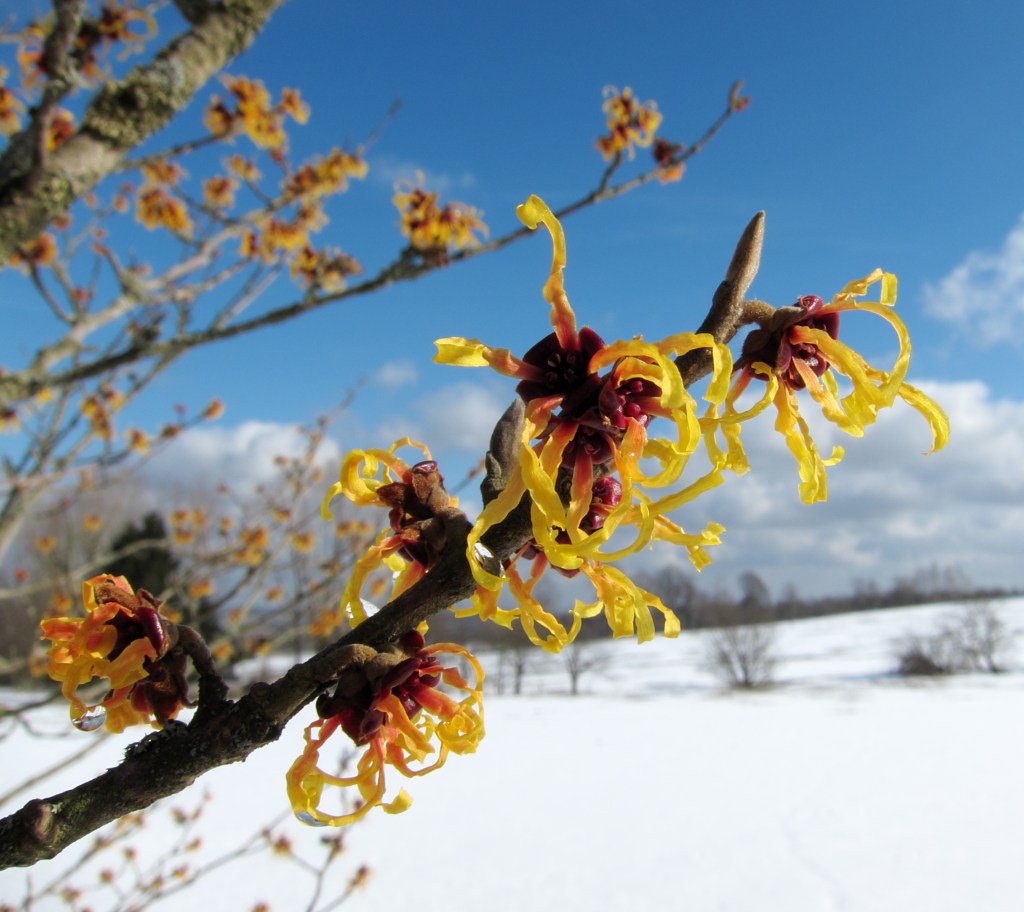
Against a stark, snowy backdrop, witch hazel feels almost like a botanical magic trick. Its spidery, ribbon-like petals unfurl in striking bursts of yellow, copper, and red, cutting right through the monochromatic landscape of late winter.
What makes it truly remarkable in a harsh northern climate is its resilience—the delicate-looking blooms simply curl themselves into tight little fists during deep freezes, only to unfurl beautifully the moment the winter sun returns.
The Permaculture Payoff: Why We Leave It Standing
Designing for the frost isn’t just an aesthetic choice; it is the foundation of an ecological yard. When you step back and allow your landscape to remain slightly wild through the winter, you are participating in active permaculture:
Insulation: Standing stems and fallen leaves act as a natural snow fence, trapping snow over the crowns of your plants and insulating their deep roots against freezing temperatures.
Overwintering Habitat: Native solitary bees and beneficial insects hibernate inside the hollow stems of perennials like yarrow and coneflower.
Less Work, More Life: By skipping the massive autumn cutback, you save yourself hours of backbreaking labor and allow the garden’s natural life cycle to continue uninterrupted.
The Takeaway
The next time the first frost rolls in, resist the urge to cut everything down to the ground. Let the yarrow catch the snow. Let the prairie dropseed freeze into beautiful, sweeping mounds. A truly resilient northern garden doesn’t need to be manicured into submission—it just needs to be planted with the frost in mind.
What is your favorite plant to leave standing in the winter? Let us know in the comments below!

