
Complementary colors sit directly opposite each other on the color wheel (think blue/orange, red/green, or purple/yellow). When planted side-by-side, they make each other pop with incredible intensity.
The High-Impact Complementary Scheme
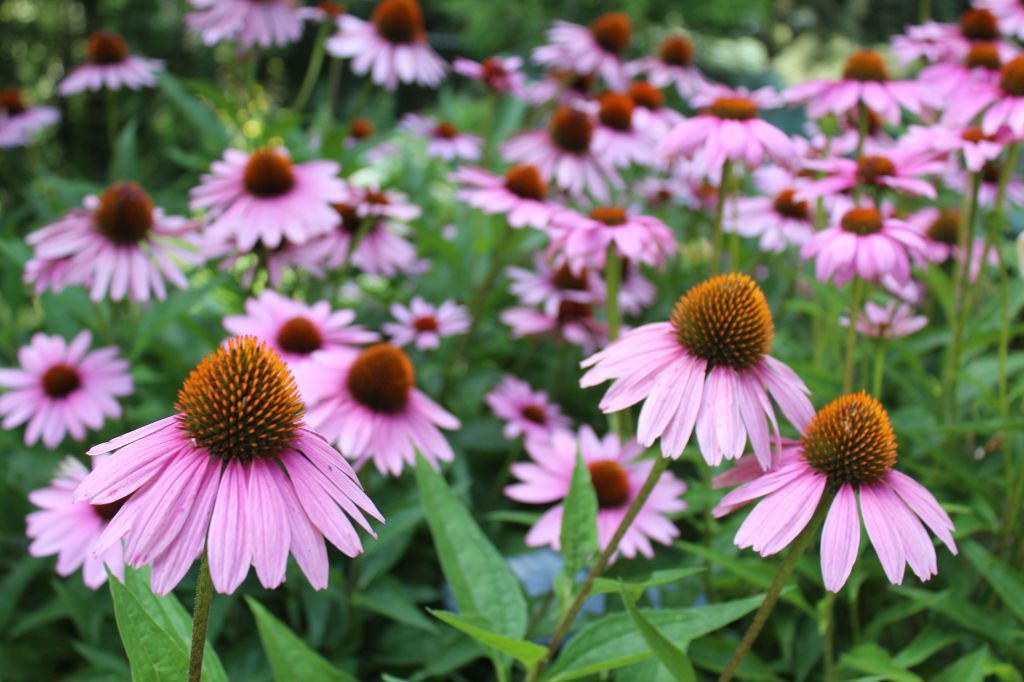
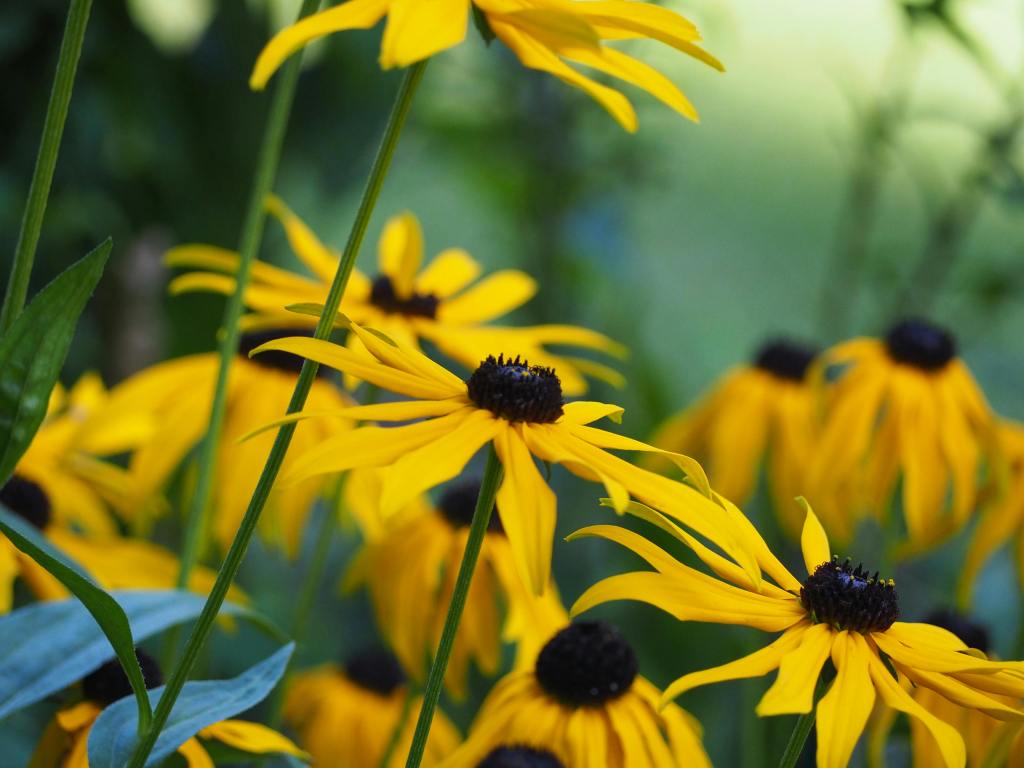
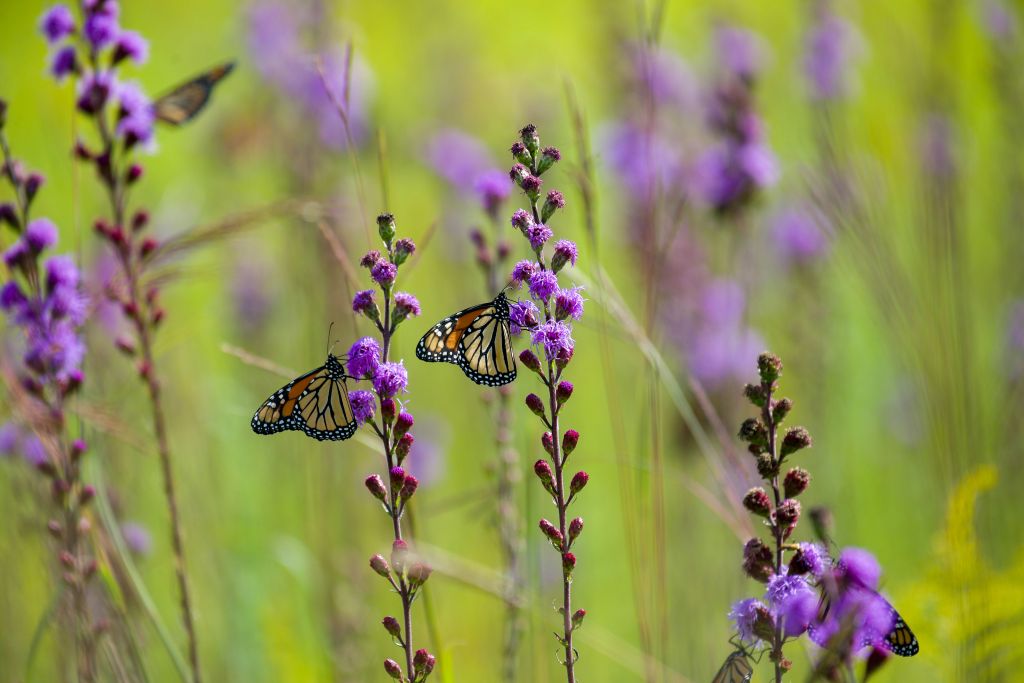
For the northern garden, Purple and Yellow is the ultimate native combination. It’s a classic late-summer pairing that thrives in full sun.
- The Plants: Pair the bright yellow, daisy-like heads of Black-Eyed Susan (Rudbeckia hirta) or Yellow Coneflower (Ratibida pinnata) with the striking lavender petals of Purple Coneflower (Echinacea purpurea) or Meadow Blazing Star (Liatris ligulistylis).
- The Pollinators: This combination is an absolute magnet for Monarchs bulking up on nectar before their fall migration.
The Analogous “Hot” Garden
Analogous color schemes use three colors that sit right next to each other on the color wheel. This creates a harmonious, unified feeling that is incredibly easy on the eyes. A “hot” analogous scheme focuses entirely on warm tones: reds, oranges, and yellows.
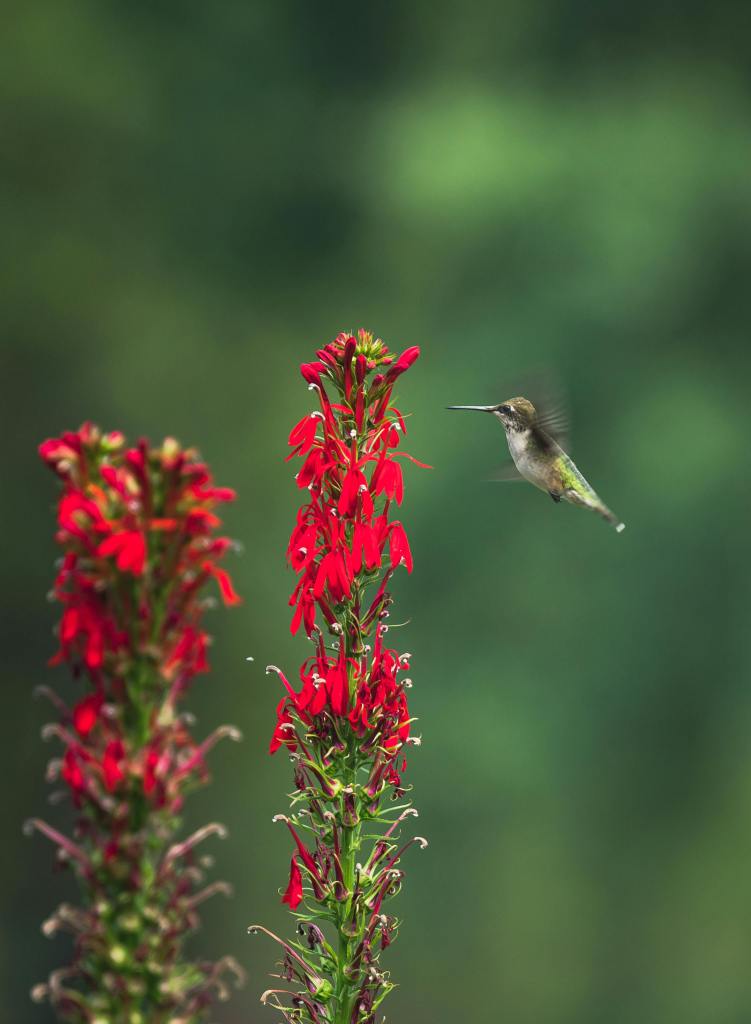
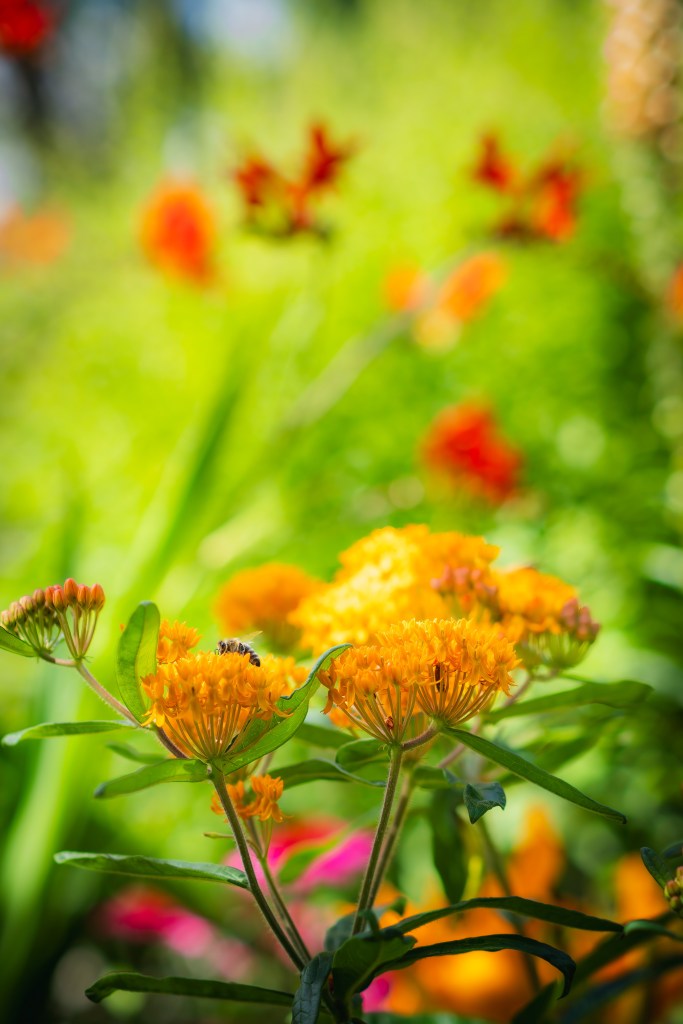

- The Plants: Start with the brilliant crimson of the Cardinal Flower (Lobelia cardinalis) in your moister spots or rain gardens. Bridge into orange with Butterfly Weed (Asclepias tuberosa), and finish with the bright, early-season yellow of Golden Alexander (Zizia aurea).
- The Pollinators: Hummingbirds are visually drawn to tubular red flowers, while the Asclepias acts as the critical host plant for Monarch caterpillars.
The “Three-Color” Rule
If you are facing a blank canvas and feeling overwhelmed at the nursery, use the strict three-color rule. Pick exactly three colors (for example: white, pink, and blue) and ruthlessly stick to them. This immediately brings order to a wild space.
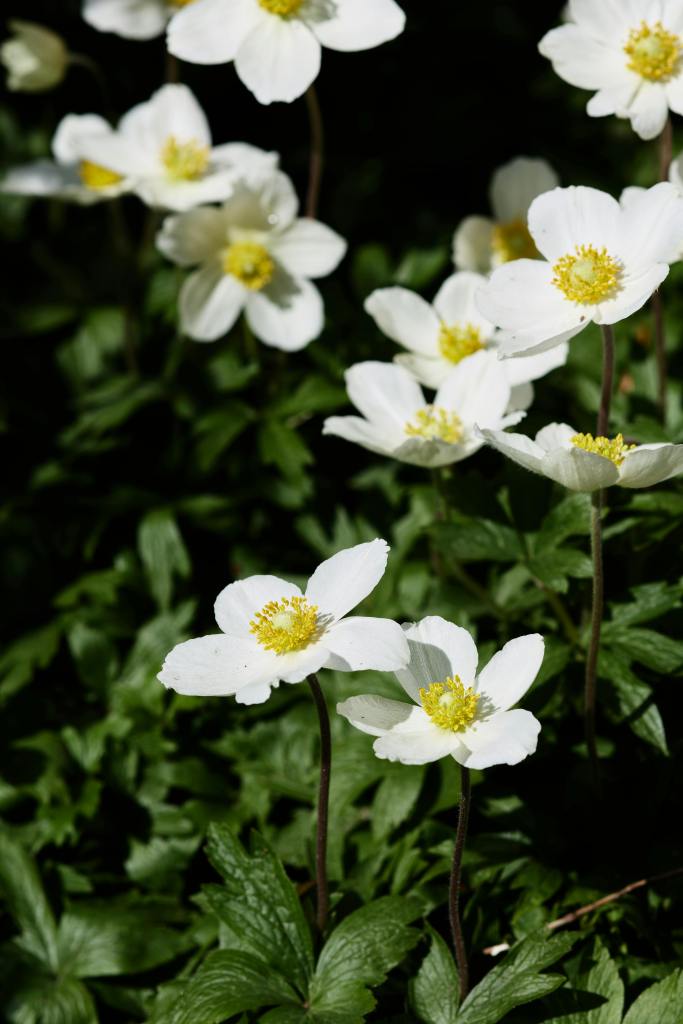
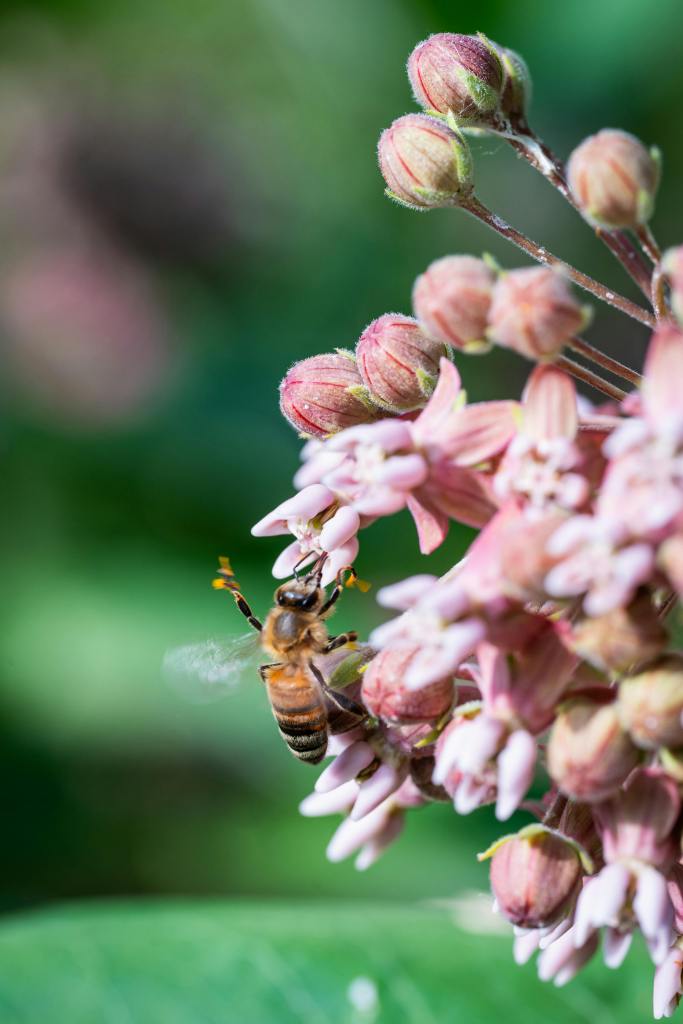
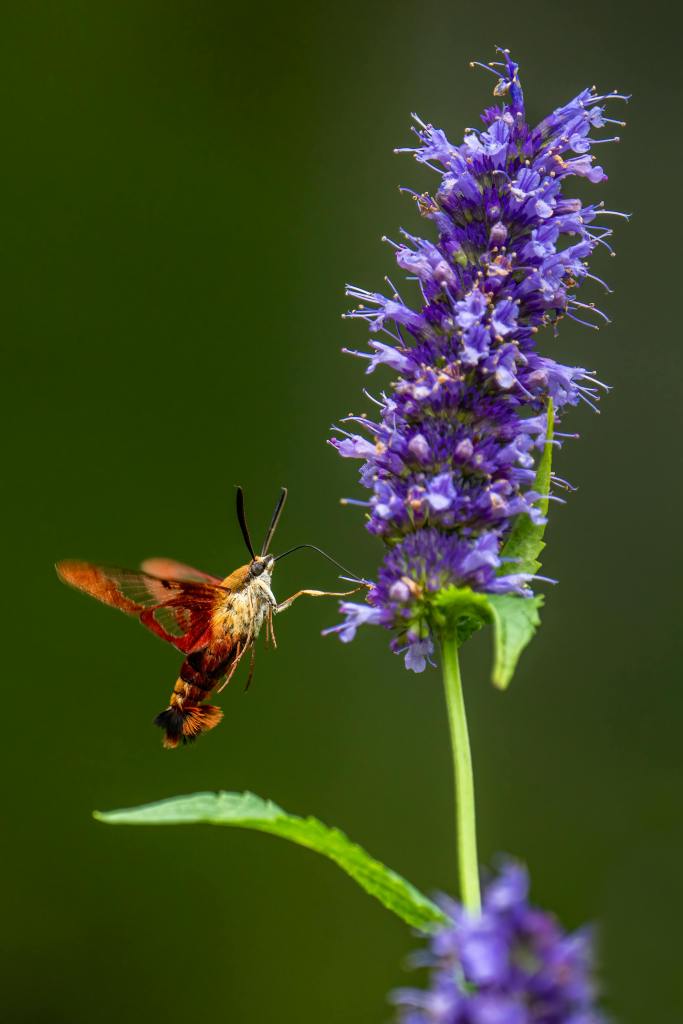
- The Plants: Try the crisp white of Canada Anemone (Anemone canadensis), the soft pink of Swamp Milkweed (Asclepias incarnata), and the deep purple-blue of Anise Hyssop (Agastache foeniculum).
- The Design Perk: Repeating these exact same three colors in drifts across your yard tricks the eye into seeing an intentional, continuous landscape rather than a random assortment of individual plants.
Key insight: You don’t have to overhaul your whole yard at once. Try applying one color scheme to a single 4×8 garden bed this season and see how it transforms the space!
What color palette are you dreaming up for your pollinator patch this year? Drop your combinations in the comments!

